EN
 CZ
 DE
 PL
 ES
 FR
 IT
 HU
 SK
 UA
 EL
Protherm Production: The Power of Shared Experience
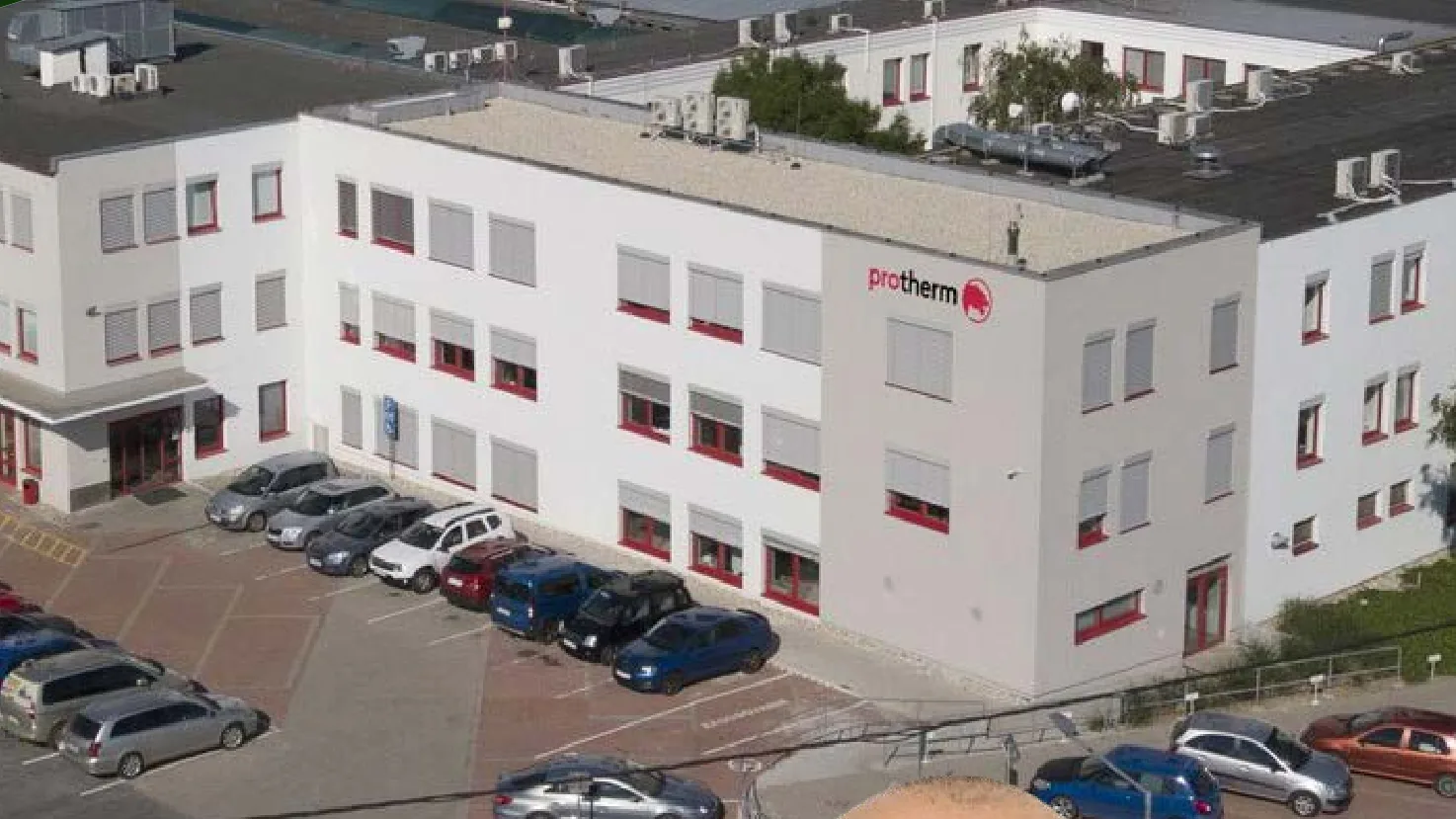
How proven know-how from one plant helps transform logistics at another. Protherm Production, s. r. o., based in Skalica, is part of the international Vaillant Group. It manufactures indoor heat pump units, gas boilers, electric boilers and electric water heaters for three key brands: Vaillant, Protherm and Saunier Duval. The Skalica manufacturing plant is one of the group's major plants and has extensive production and logistics facilities.
We strive to unify and standardise individual applications and processes. When we see that a solution works at another plant, it is much easier for us to introduce it.
Ján Škojec — Protherm Production
from the start of implementation to go-live
until every carrier had fully switched over
of inbound pallets covered in the very first wave
Why did you decide to look into selecting a system for planning loading and unloading?
Before introducing Time Slot Control, we used our own time slot booking application. However, it did not cover everything that managing unloading involves. We needed to organise the process better and plan our receiving capacity. We learned about Time Slot Control through experience sharing between Vaillant Group plants, from Senica, where the system was already in operation.
How did you go about searching for a time slot management application?
The key was best practice sharing within Vaillant Group. Our colleagues in Senica passed on their experience from real-world operation. Because we strive to standardise applications and processes across the group, Time Slot Control was a natural choice for us.
How did the system implementation go? Did you encounter any issues, and did everything proceed on schedule?
The implementation was simple. Roughly 1–1.5 months passed from its start to go-live. We supplied information on suppliers and contacts; most of the data preparation and the overall transition to the new system was handled by the Time Slot Control project team.
We trained our key users online in dock bookings, resource settings and the basic functions. We quickly found our way around the application.
We brought carriers on board gradually: first the key carriers handling 80 to 90% of inbound pallets, then the smaller ones. The complete switchover to Time Slot Control took no more than 2.5 months.
What changes did you notice after implementation? Did it have any benefits or advantages?
The biggest benefit is precise capacity management and better organisation of goods receipt. In the system, we set standards for processing each type of delivery and plan unloading slots accordingly. We know how long it takes to process a pallet, how many staff we have and what our receiving capacity is. The slots therefore match what operations can actually handle, unloading runs more smoothly and downtime has almost disappeared.
Transparency is another significant benefit. Slot compliance statistics reveal carriers that do not follow the rules and feed into our supplier evaluation. This makes us more efficient and the whole process more predictable.
Have you quantified the savings generated by the TSC application? Or do you have any other specific data on how efficiency has improved thanks to TSC?
We have not quantified specific financial savings. The goal was not primarily to cut costs, but to organise operations better and make better use of both human and technical resources. The number of staff has not changed significantly; what has changed is how they are organised and deployed. Thanks to the system, we know our receiving capacity and how many unloadings we can handle.
Quantification is also complicated by the simultaneous move to a new SAP system. Both changes affected the organisation and transparency of goods receipt, so their benefits cannot easily be separated. The main value lies in better capacity planning and control over the process.
How did business partners, customers and carriers adapt to the system?
Some carriers were initially unhappy with the new way of booking. They were used to arriving in the morning, but if the morning slots were taken, they had to choose another time based on our actual receiving capacity. This is more a change in organisation and rules than a problem with the system. Most quickly got used to it; this kind of operational control is standard in logistics today.
Why TSC from Lotraco?
Experience from another Vaillant Group plant was decisive. Thanks to best practice sharing, we saw the system in operation and gained insights from colleagues who were using it. The solution exceeded our expectations and fits in with the effort to standardise processes across the group. This means the proven system can also be used at other plants.
How satisfied are you with the application, the user interface and technical support?
We are satisfied with the application. It is clear and user-friendly and offers sufficient configuration options. We have used technical support about twice. As a key user, I can handle most routine situations myself. We appreciate being able to set working hours, exceptions and dock capacity when staff are absent. The system is easy to use and users quickly find their way around it.
What benefits of TSC would you highlight?
The biggest benefits are transparency and precise capacity planning. We know when and how quickly we can unload a specific truck. The process standards in the application let us plan according to real capabilities and keep to the slots. Data on carrier behaviour helps us evaluate and further improve the process.
Would you recommend TSC to another company in your industry?
Definitely, and not only to companies in our sector. Time Slot Control is a clear application that helps organise goods receipt and manage logistics flows in many different types of companies.
Another Vaillant Group plant is introducing a new SAP system and will then turn to time slot management. Our experience with TSC can become part of further best practice sharing. A solution already proven in operation does not have to be reinvented by the next plant.
Have you used any custom settings or add-on modules of Time Slot Control?
To record arrivals, we use a self-service kiosk where the driver confirms their details, verifies their phone number and completes health and safety (OHS) training. This also gives us an overview of people moving around the site. Before unloading, the system automatically sends the driver an SMS with the time and dock number.
Slot Monitor also gives warehouse staff an overview of the daily loading and unloading plan. These functions help us increase safety, prevent confusion and lost time, and make our logistics operations more efficient.